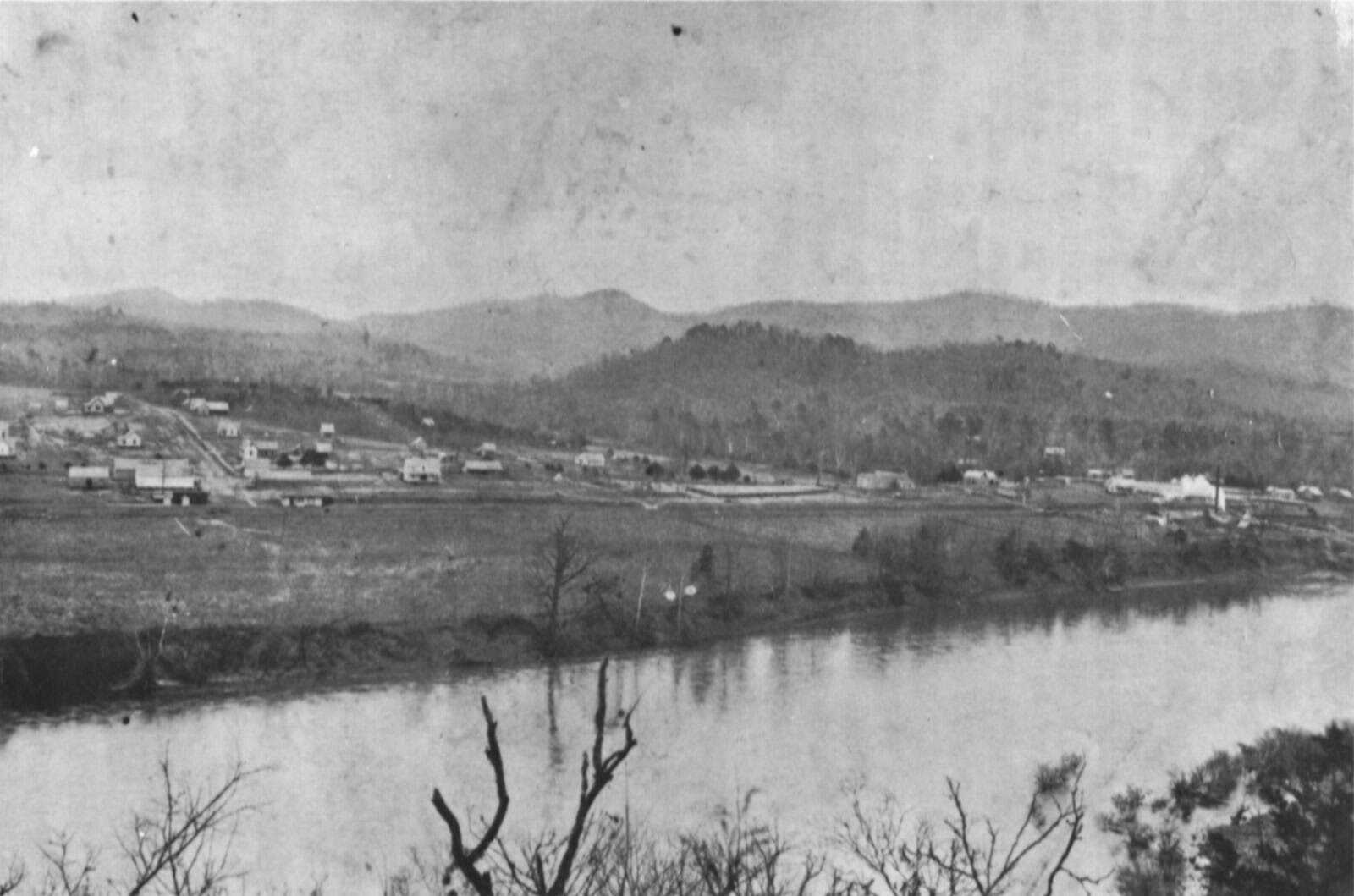
Jane Mason Jeffery (1769-1853) served as a frontier “doctor” and midwife in the wilds of the White River Valley during the Territorial period and early statehood years when access to healthcare was virtually nonexistent.
Written by Jessica Crenshaw
As I’ve been researching how healthcare work of women from Arkansas’s past connects to our present day, most of what I’m learning is not pleasant. But one day I discovered something pretty cool.
One of the women, Jane Mason Jeffery, the female pioneer “doctor” on my research list, is one of my fifth-great grandmothers! I am from Arkansas, so the probability of being related to the Jeffery family is high. Especially since parts of my family come from the same county Jane’s son helped create (literally.)
I’ve been joking for years with a friend, last name of Jeffery, about being cousins since we both hail from neighboring small towns in rural Independence County. Turns out I was right all along! I was delighted to find the connection and learn what an important role the Jeffery family played in early Arkansas. So it’s with particular pride that I share the story of Jane Mason Jeffery and why her work still matters.
We can be certain Jane’s life was difficult.
While we have no letters or source material to indicate such, judging from other accounts by women in Colonial and Territorial Arkansas, her life was hard. We don’t know who her parents were, but there are theories. She was born in 1769 in Virginia and while community and family members called her a doctor, she likely didn’t have much formal medical training.
Jane married James “Old Jim” Jeffery when she was sixteen and gave birth to her first child the year after. Sometime around 1800, the young family set off across the developing American western frontier. They didn’t stay in one place for very long. We know they were in North Carolina, Knoxville, Tennessee, and Christian County, Kentucky.
Around 1808, they were living in Union County, Illinois, and by 1816, they were in the Arkansas Territory, settled near their eldest son who had already established his own family at a spot on the banks of the White River called Pine Bayou. The site would eventually become Mount Olive, thought to be the first permanent settlement between Batesville and the Missouri state line.
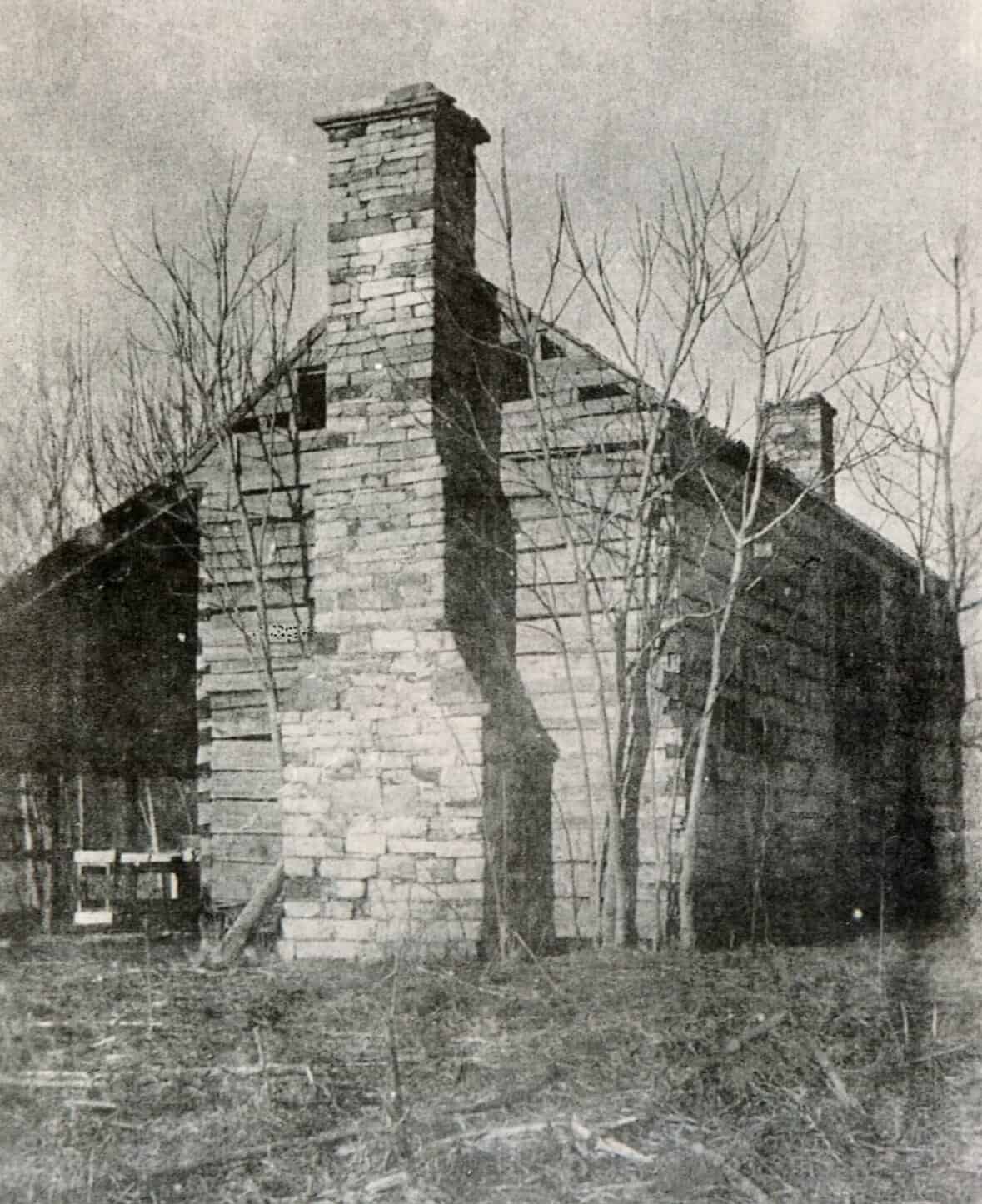
This is the last known photograph of the two-story dog-trot Jeffery “old home place” at Mount Olive. The family were some of the first settlers in the area. The building is no longer extant. Photo courtesy of Dr. Freda Cruse Hardison.
Jeffery family historian Dale Hanks writes in The Jeffery Historical Quarterlies that Dr. Jane was one of the first doctors in the White River Valley. She treated gunshot wounds, accidents “of all kinds”, and a wide array of frontier diseases. She attended the birth of many babies and it was her custom to ride horseback for miles and spend days at a time assisting women. She was known throughout the mountains and valleys of north Arkansas, “fighting snow and ice and bitter winds to look after sick people and to deliver babies,” Hanks writes.
Family lore, recorded in letters and remembrances of grandson J.J. Sams, touts Jane’s education and longevity.
When her and my grandfather were first married he did not know his letters. She learned him to spell and then to read… I heard her say that she commenced to be a doctor in her thirteenth year and followed it up as long as she lived. She was eighty six years and six months old when she died.
Jane and Old Jim had six children, four boys and two girls whom she also taught them all to read. Jane was known for being headstrong and so dedicated to helping folks, in the 1820s she and Old Jim parted ways. Even for Territorial Era backwoods Arkansas, this kind of separation was unusual. The family circulates a story called “The Falling Out” about Old Jim’s ultimatum. Local historian and genealogist in Stone County, Dr. Freda Cruse Hardison offers insight in her essay “Mothers of the White River.”
Jane was an early human rights advocate in her willingness to provide care regardless of race, color or creed; Indian, white, black, she would often travel 50 or 60 miles by foot or horseback to aid a woman in need. This eventually led to a falling out with her husband who had demanded that she stop providing care for individuals who were unable to pay. Against the wishes of her husband, she responded to an Indian woman in need, crossing the swollen White River in a canoe during a heavy rain storm into the Indian Territories of present day Stone County. She knew that Jim was angry but she defied him which led to him throwing her out of the house and the Jeffery family.
Jane ended up splitting her time living with daughter Lavina and her husband Thomas Culp (my great-great-great-great grandparents) and her son Daniel Mason Jeffery and his wife, a Native American woman named Mary Bowcock. The rift between Jane and Old Jim was so great they were buried in different cemeteries.
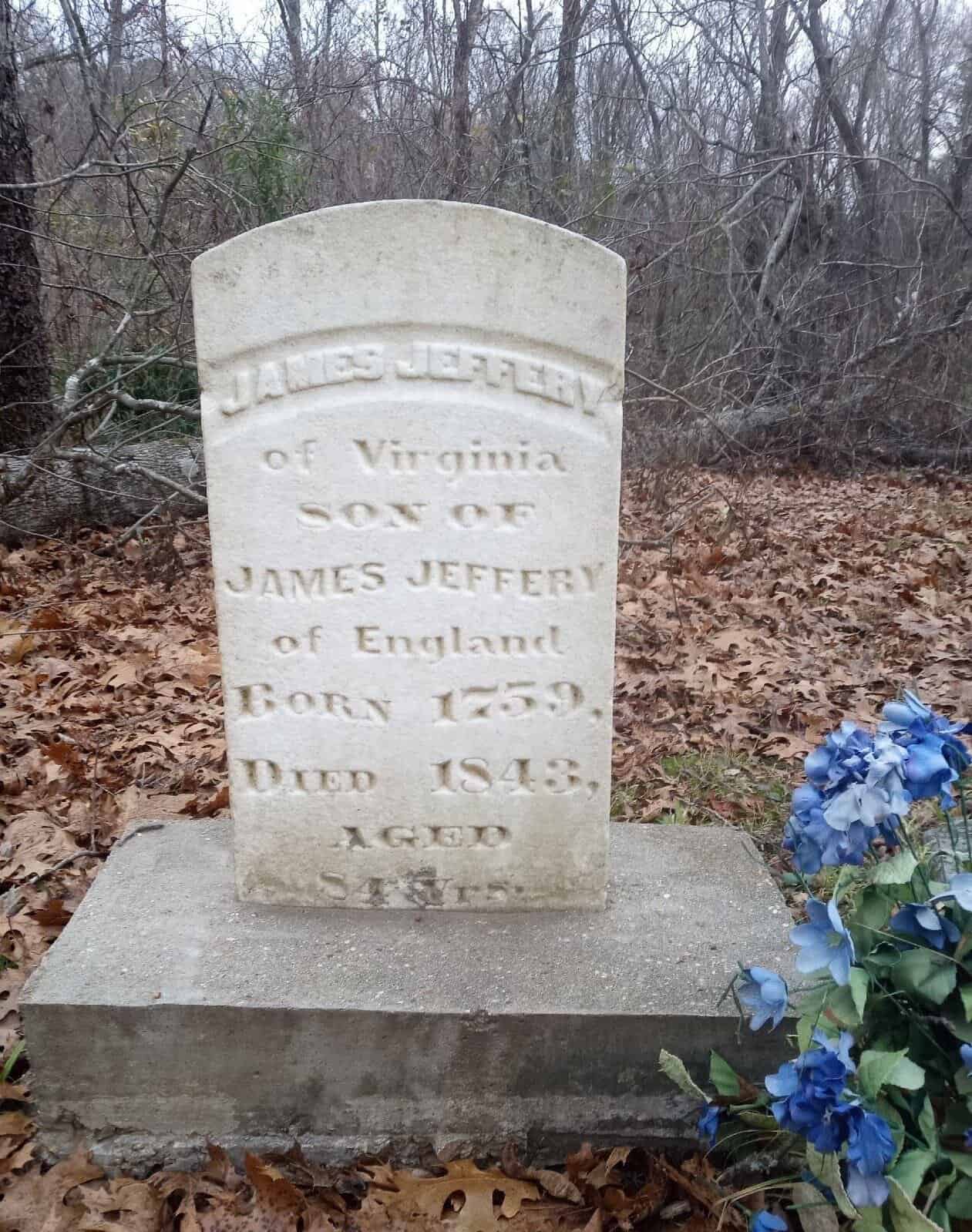
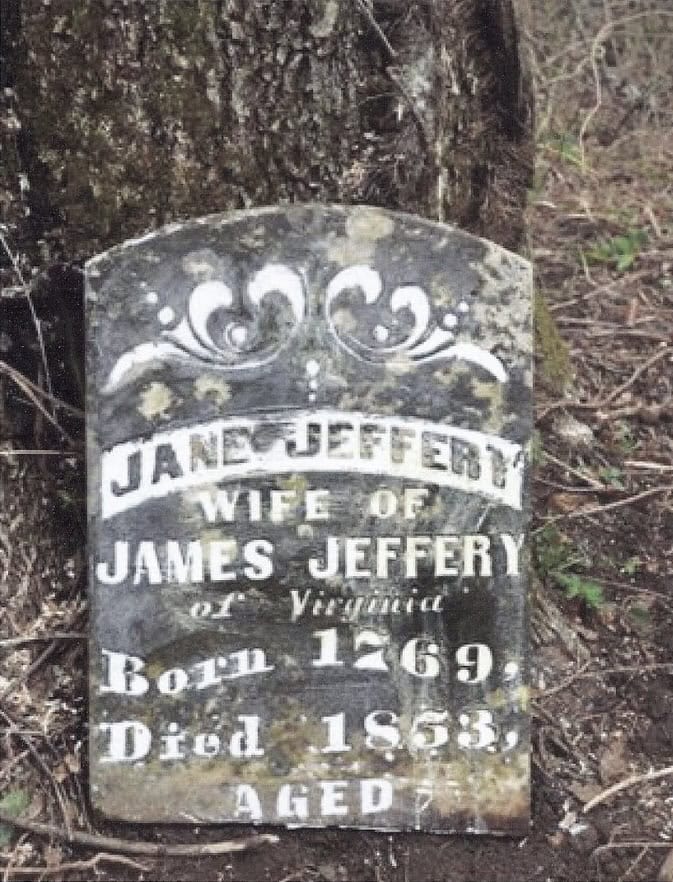
Left is the gravesite of James “Old Jim” Jeffery in the Jeffery Cemetery. Right is the site of Jane’s final resting place near where she lived with her son Daniel after “The Falling Out.”
In an essay called “The Jane Mason Theory,” Hanks explores Hardison’s ideas and all the possibilities surrounding Jane’s parentage and training in the healing arts. Hardison posits that Jane obtained it from her mother since anything related to women’s reproductive health, especially birthing babies, was exclusively a woman’s job. It’s also possible that Jane worked as a nurse for a doctor in Virginia. We will likely never know the details, but we do know she had a physician skills. It was common in the region when serious injuries and illnesses occurred for people to say, “Better get ‘em to Granny Jeffery.”
Why Her Work Still Matters
Two centuries after Jane traveled miles on horseback to help in emergencies and illness, access to healthcare in rural Arkansas, especially for women and mothers, is still a challenge. Today, 50% of Arkansas counties are maternity care deserts.
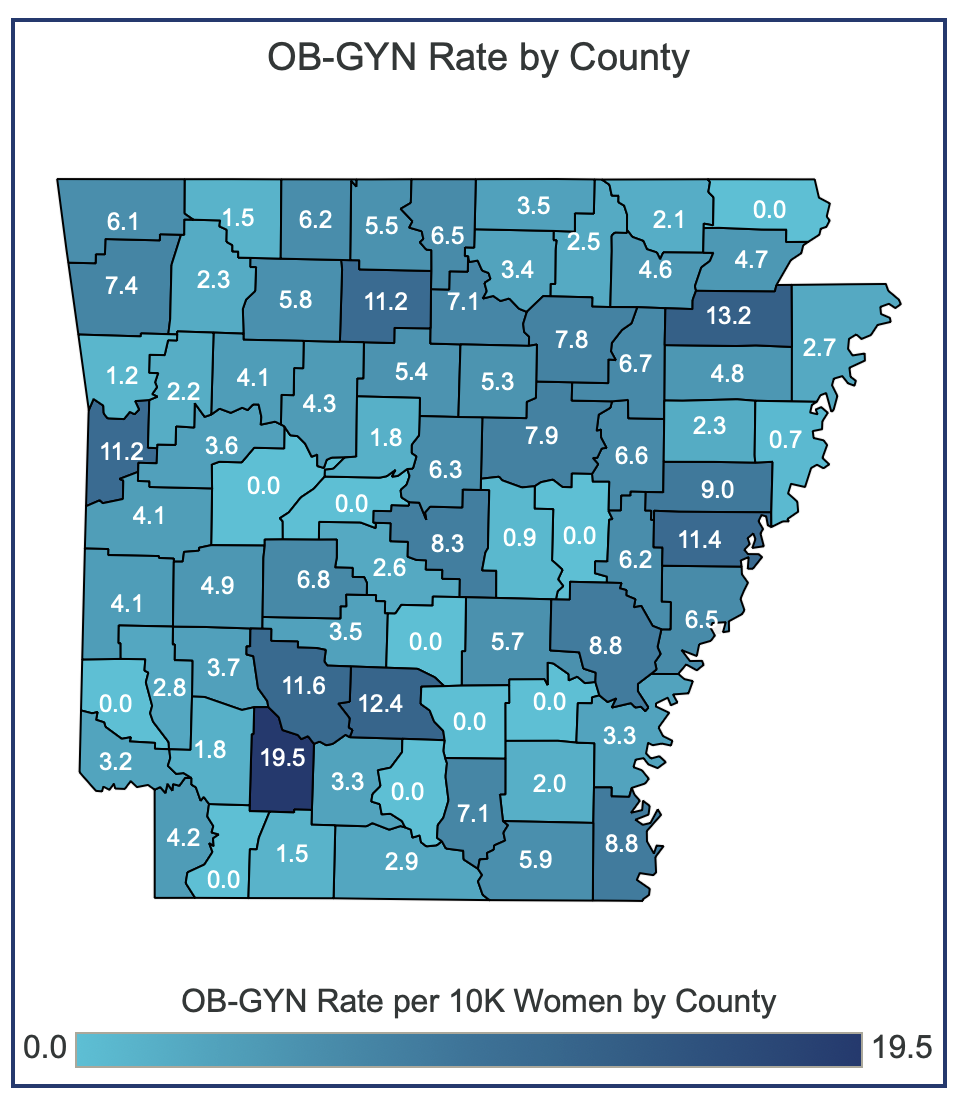
Source: Association for Community Health Improvement (ACHI). Data from 2022.
Ten counties have absolutely no active OB-GYNs. Only thirty-three hospitals in the entire state still operate labor and delivery units. Since 2020, six maternity wards have closed. Pregnant women in rural Arkansas face long ambulance rides instead of horse rides to reach care. Increasingly, paramedics deliver babies en route because there isn’t a hospital nearby.
If we can divert funds to pregnancy crisis centers ($1 million in 2022 and $2 million in 2024) that are not required to have medical directors, why not help rural hospitals and maternal units shuttered due to lack of funds? It’s important to distinguish these centers from full-service medical providers, because in some parts of rural Arkansas they are, like Jane was, the only care option.
Pregnancy crisis centers are typically not bound by HIPAA privacy laws, offer only a fraction of what true medical centers provide, and do not deliver babies. In Arkansas the bulk of them, sometimes called “pregnancy resource centers,” are faith-based nonprofits. These places may offer varying levels of needed care, but are not required to disclose pregnancy health complications. A traditional medical clinic is required by law to inform the mother and offer treatment options. Since Arkansas ranks number one in maternal health mortality, these distinctions matter.
There are ways to support rural healthcare in Arkansas.
Expanding Medicaid coverage for new moms from sixty days to twelve months is a step forward. Investing in rural healthcare initiatives and local providers will directly fund rural communities from the bottom up. We could offer loan repayment to attract medical professionals. It’s not easy work, but it can be done. The University of Arkansas for Medical Sciences (UAMS) is at the forefront when it comes to the state’s maternal health crisis. The school has acquired a number of federal grants specifically for improving the plight of rural mothers in Arkansas.
In October last year, UAMS announced a grant award of $4 million to work in rural south Arkansas. The program, called HEART Moms, Helping Expand Access to Rural maternal health care Transformation for Moms, aims to reduce maternity-associated health problems and deaths in Ashley and Union counties. Arkansas Rural Health Partnership is a UAMS partner with the mission to improve rural healthcare access by facilitating programs like the Arkansas Rural Health Academy, a rural health “Workforce Network,” and a health career website. These groups can’t do all the work, though. We need rural health co-ops and stable broadband so telehealth is an option.
I can’t help but be inspired by Jane.
Even before I knew our family connection, I admired her grit and equestrian skills. I think Dr. Nirvana Manning here in Central Arkansas might be our modern equivalent to “Dr. Jane of the Ozarks.” She is the chair of the UAMS College of Medicine Department of Obstetrics and Gynecology and director of the Arkansas Center for Women & Infants Health, formed in 2024 with a $5 million congressional appropriation facilitated by U.S. Sen. John Boozman. Dr. Manning is inspiring, especially when you learn about some of the simple but effective ways (Proactive Postpartum Call Center) UAMS is helping.
I want to add this new ancestor to my resume: direct descendant of the “‘Dr. Quinn Medicine Woman’ of the Ozarks”. While I sure didn’t inherit Jane’s doctoring skills and healer’s temperament, I like to think I inherited her “human rights advocate” and “willingness to provide” genes because I am worried about our rural friends and family, especially women. Doctors no longer uphold the habit of making house calls on horseback, but this is Arkansas… sometimes they still do.
If the maternal healthcare crisis in Arkansas concerns you, too, check out what Arkansas Advocates for Children and Families is doing.
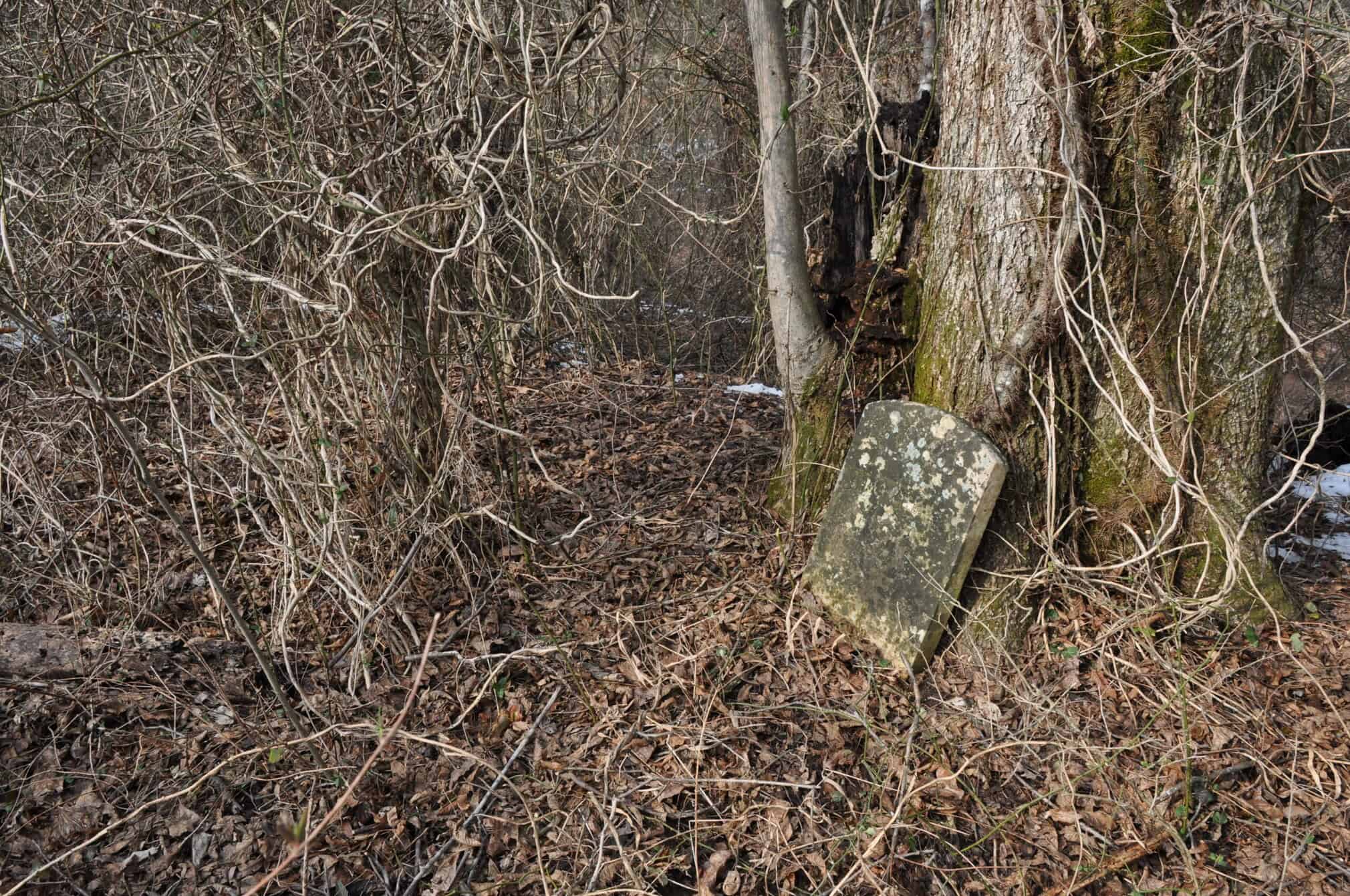
Jane Mason Jeffery’s gravesite before concerned Jeffery descendants cleared and cleaned the area. Photo courtesy of Dr. Freda Cruse Hardison.
Sources:
Hanks, Dale, ed. The Jeffery Historical Quarterlies. Kearney, NE: Morris Publishing, 2016.
Hanks, Dale. “Jane Mason Theory.” Unpublished manuscript, n.d.
Phillips [Hardison], Freda Cruse. “Ken Coon, Jr & The Old Perrin Place.” Stone County Citizen. Mountain View, AR, n.d.
Phillips [Hardison], Freda Cruse.”Mothers of the White River Valley.” Stone County Citizen. Mountain View, AR, n.d.
Polston, Mike. “Jehoiada Jeffery (1790–1846).” In Encyclopedia of Arkansas, last updated June 16, 2023. https://encyclopediaofarkansas.net/entries/jehoiada-jeffery-15492/.
Rorie, Kenneth. “Optimus (Stone County).” In Encyclopedia of Arkansas, last updated February 15, 2024. https://encyclopediaofarkansas.net/entries/optimus-stone-county-9784/.
Sams, J.J. Memoir. Accessed via Wikitree, https://www.wikitree.com/wiki/Mason-4915#_ref-0.
Featured image: Mount Olive, date unknown, from the Exploring Izard County blog maintained by Denny Elrod.
Jessica Crenshaw, descendant of the “‘Dr. Quinn Medicine Woman’ of the Ozarks,” serves as Editor in Chief and Director of Programming at Arkansas Strong. A self-proclaimed “Arkansawyer,” she enjoys writing about interesting people and beautiful places in her home state. She was the Independence County 4-H BB Gun Champion in 1988 (date unconfirmed) and at the age of 12 was awarded a Grand Champion prize at the Independence County Fair for her cornbread-making skills.