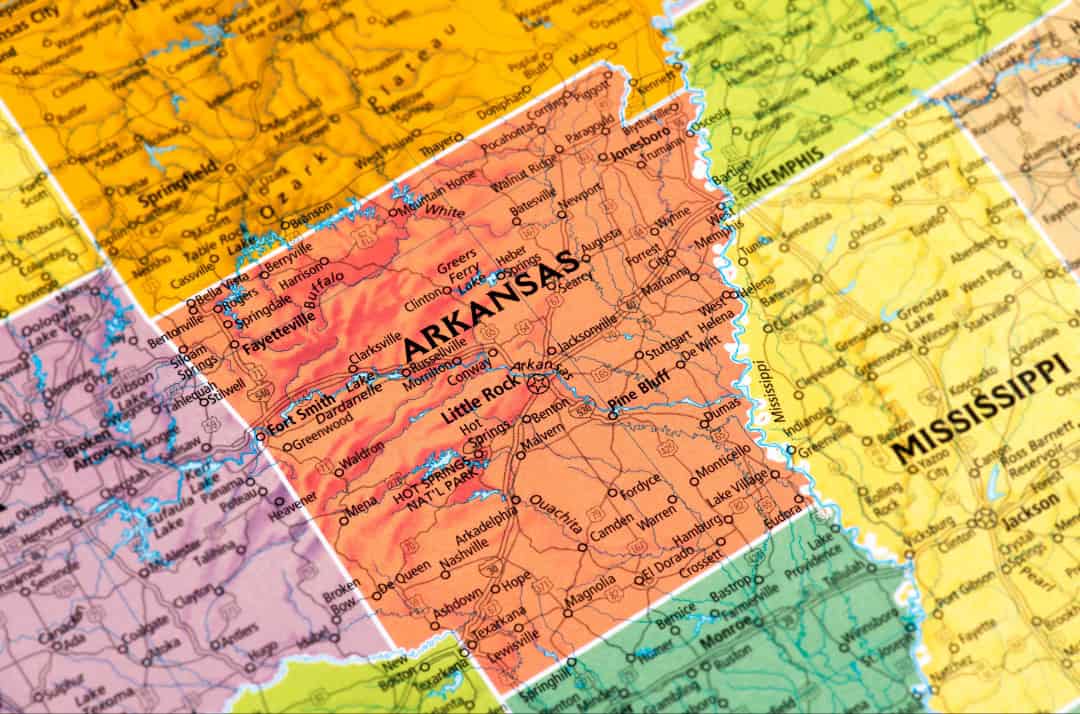
It’s Election Day across the nation. Here in Arkansas, voters who didn’t get to the polls early are braving the weather to cast their ballots today.
Arkansas has held federal elections since 1819, but for most of that history, the ballot was reserved for a select few, and early voting wasn’t an option. Here are three interesting facts about voting rights in Arkansas:
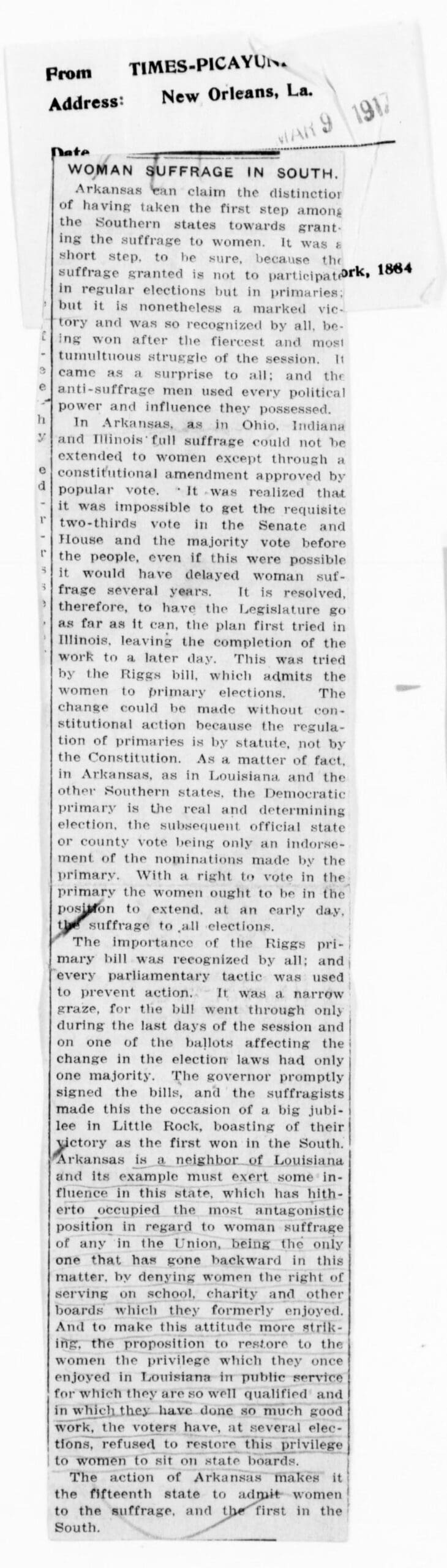
1. Arkansas was the first state in the South to let women vote, but only in primaries.
The fight for women’s suffrage in Arkansas began decades before women cast their first ballots. In 1868, Miles Ledford Langley, a delegate to the Arkansas Constitutional Convention, proposed extending voting rights to all literate citizens over the age of 21, regardless of sex. When he addressed the Arkansas House of Representatives, the Arkansas Gazette reported that “Mr. Langley spoke earnestly but his remarks elicited much laughter.”
Over the following decades, women in Arkansas organized suffrage associations, delivered speeches, campaigned on street corners, and lobbied lawmakers for the right to vote. Proposed constitutional amendments repeatedly failed, including efforts in 1911 and 1915, but the movement continued to grow, with suffrage organizations emerging in Little Rock, Pine Bluff, Hot Springs, and Fayetteville. Finally, in February 1917, Arkansas became the first Southern state to allow women to vote in primary elections. It wasn’t full suffrage, but it was a historic victory.
2. 109 years ago, a Fort Smith woman was the first to cast a vote in the South.
On November 13, 1917, Dymple Johnson—Arkansas’s first female dental hygienist—made history when she voted in a special mayoral recall election. She became the first woman in the entire South to cast a ballot in a public election.
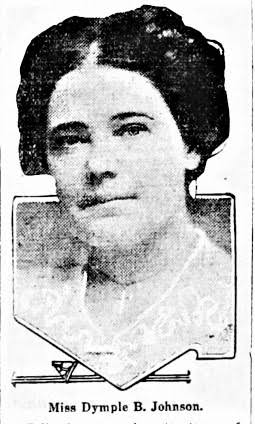
Earlier that year, Arkansas passed legislation allowing women to vote in primary elections, with the first regularly scheduled primaries set for May 1918. However, a strike by Southwestern Bell telephone operators in Fort Smith set off a chain of political events that led to the removal of Mayor John Heskitt Wright and a special election to replace him.
Local officials treated the special election as a primary, giving Johnson the opportunity to cast her ballot months before women across Arkansas were expected to do so for the first time.
In May 1918, over 40,000 Arkansas women voted in the state’s primary elections. The following year, Arkansas became the twelfth state to ratify the 19th Amendment, helping pave the way for women’s suffrage nationwide in 1920.
3. For Black Arkansans, voting took another generation to secure.
Arkansas’s 1868 constitution extended voting rights to Black men, two years before the 15th Amendment prohibited denying voting rights based on “race, color, or previous condition of servitude.” Black men voted in significant numbers until the 1890s when Arkansas adopted the exclusionary “white primary” as part of a broader effort to disenfranchise Black voters.
Although Arkansas ratified the 19th Amendment in 1919, racial discrimination prevented many Black women from exercising their rights. White-only primaries, poll taxes, and intimidation continued to keep Black voters from the polls.
The Supreme Court struck down white-only primaries in 1944, and Arkansas abolished its poll-tax in 1964. The following year, the Voting Rights Act of 1965 was passed, establishing federal protections against racial discrimination in voting, ultimately allowing for significantly more participation from Black Arkansans. While the law marked a monumental step toward equal voting access, it did not eliminate every barrier to participation.
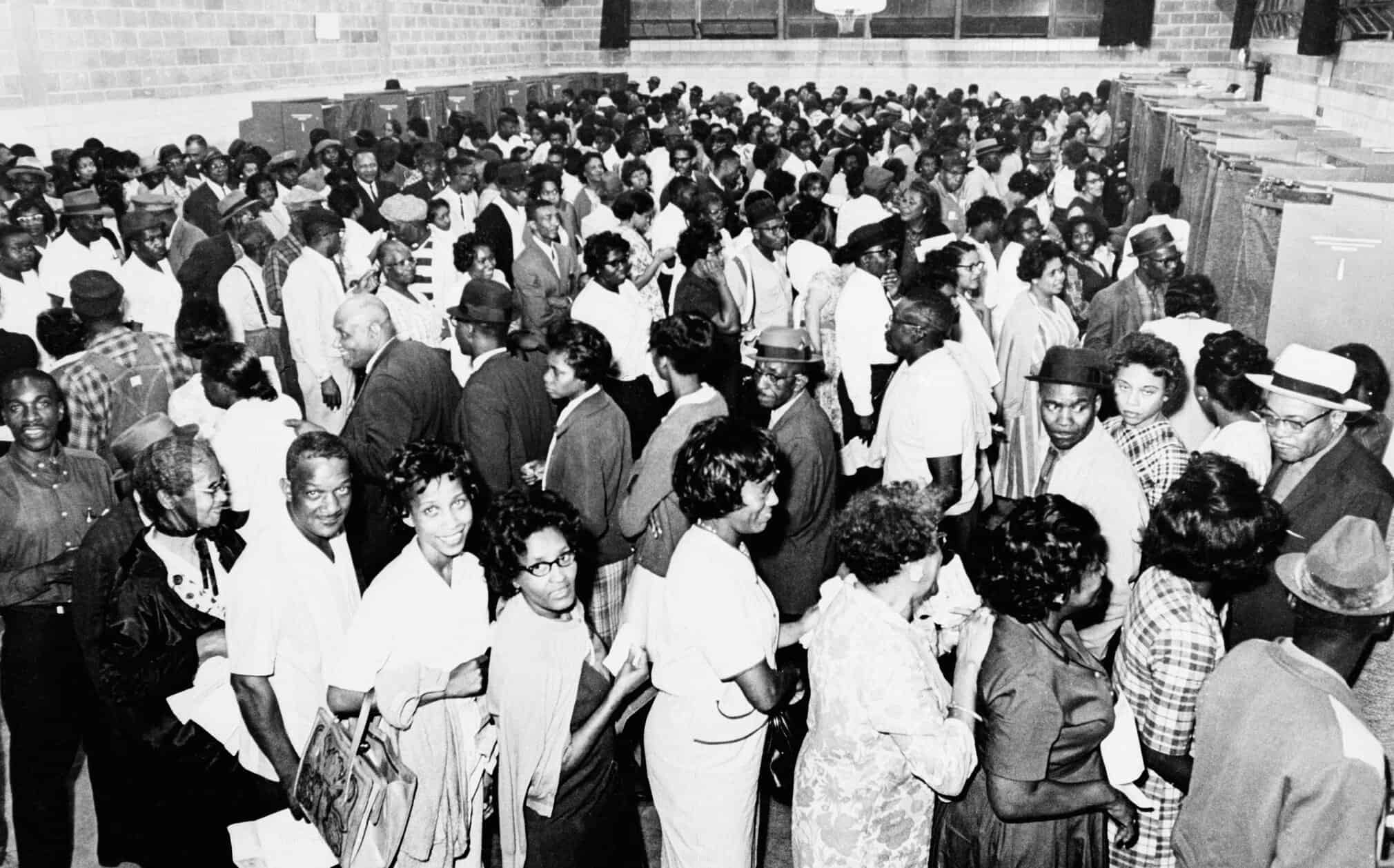
As proud Arkansans, we want to celebrate the Natural State that led the South in granting women the right to vote, but we also want to recognize that these victories did not extend equally to Black Arkansans. Voting rights have been expanded, challenged, and defended throughout our history.
The ballot we cast represents generations of Arkansans who organized, persisted, and fought for a democracy that represents all of us.

For further reading:
- Women’s Suffrage in Arkansas: https://encyclopediaofarkansas.net/entries/womens-suffrage-movement-4252
- Dymple Johnson: https://www.swtimes.com/story/news/local/2022/11/13/dymple-johnson-first-woman-to-vote-in-the-south-suffragette/69630296007
- Buy Dymple’s T-Shirt: https://www.olenandco.com/product/dymple-johnson-women-s-suffrage-tee-updated-design-pre-order-/AW6TOYY7HZKJWZH37CCRCUV4
- The Arkansas Freeman (Little Rock, Ark.) 1869- 18??, Library of Congress: https://www.loc.gov/item/sn83025492
- Arkansas’s Poll Tax: https://encyclopediaofarkansas.net/entries/poll-tax-5045
- Voting Rights in Arkansas: https://encyclopediaofarkansas.net/entries/voting-and-voting-rights-4916/
- Impactful Voter Images to Inspire You to Get to the Polls, Essence Magazine: https://www.essence.com/news/politics/vintage-black-voters-history/